
PS4 and PS5 game development in 2026 combines advanced rendering technology, multiplayer infrastructure, scalable production pipelines, and real-time optimization systems to create modern console gaming experiences. Developers now use technologies like Unreal Engine 5, advanced PlayStation SDKs, SSD streaming systems, and ray tracing pipelines to build immersive cross-generation console titles for both PS4 and PS5 hardware.
The global gaming industry is projected to surpass $300 billion in annual revenue by 2026, while PlayStation remains one of the world’s largest gaming ecosystems. Sony has now sold more than 75 million PS5 consoles worldwide, while the PS4 continues maintaining a massive active player base. Because of this, many studios still prioritize cross-generation PS4 and PS5 game development to maximize audience reach, player retention, and long-term revenue performance.
Modern console development pipelines focus heavily on performance optimization, real-time rendering, multiplayer stability, console certification, and live-service infrastructure. Developers must now support seasonal updates, accessibility requirements, localization workflows, analytics systems, and post-launch live operations while ensuring stable gameplay performance across different PlayStation generations.
PS4 and PS5 Development Facts in 2026
- More than 75 million PS5 consoles have been sold globally
- The gaming industry is expected to exceed $300 billion annually by 2026
- Cross-generation releases remain commercially important because of the PS4 install base
- Unreal Engine 5 is one of the leading engines for modern console development
- Modern console games rely heavily on live-service systems and post-launch updates
- Optimization and certification are now critical stages of console production pipelines
PS4 vs PS5 Development Comparison
Storage
PS4 development relies on traditional HDD architecture, while PS5 development uses ultra-fast SSD streaming systems for significantly faster loading and asset streaming.
Graphics
PS4 games focus on standard rendering pipelines, while PS5 games support advanced technologies such as ray tracing, 4K rendering, and real-time global illumination.
Loading Times
PS4 titles often require longer loading sequences due to hardware limitations, while PS5 SSD architecture enables near-instant streaming and dramatically faster load speeds.
Optimization Focus
PS4 optimization focuses heavily on memory constraints and hardware scalability, while PS5 optimization prioritizes GPU performance, rendering quality, and high frame-rate stability.
Development Priorities
PS4 development emphasizes scalability across older hardware, while PS5 development focuses more on visual fidelity, advanced rendering systems, and next-generation gameplay experiences.
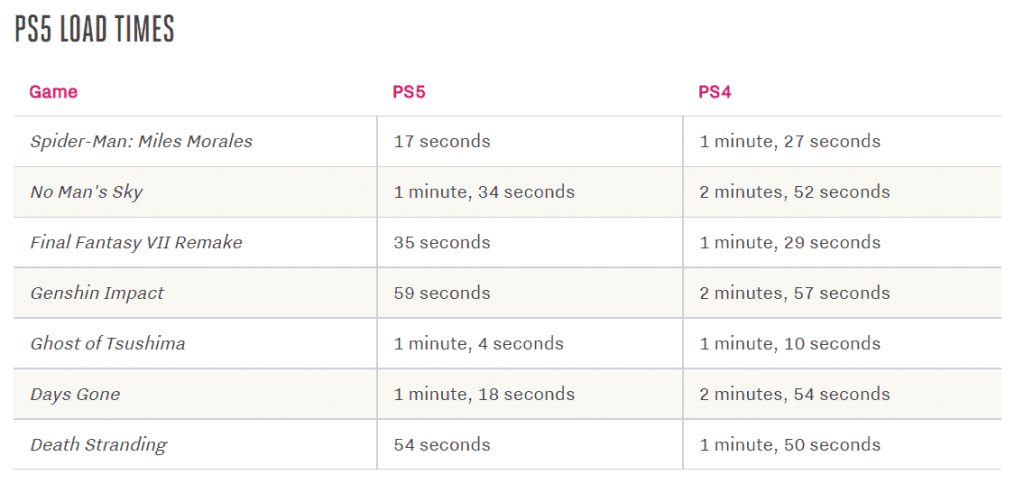
PS4 vs PS5 loading speed and streaming improvements for modern console development pipelines. Source: The Verge
How PS4 and PS5 Games Are Developed
Modern PlayStation game development starts with pre-production planning, technical scoping, gameplay systems design, multiplayer architecture, and performance target definition. Studios must determine whether projects will launch exclusively on PS5 or support both PS4 and PS5 hardware.
Most modern PlayStation titles are developed using Unreal Engine 5, Unity, or proprietary engines capable of supporting advanced rendering systems, AI systems, cinematic animation workflows, multiplayer networking, and scalable console optimization pipelines.
Optimization remains one of the most important stages of PS4 and PS5 game development. Teams optimize frame rates, memory usage, GPU rendering, SSD streaming, loading performance, and multiplayer stability to ensure smooth gameplay experiences across multiple PlayStation systems.
Before launch, console titles undergo extensive quality assurance testing and Sony certification reviews. This includes crash testing, accessibility validation, multiplayer testing, save system verification, localization checks, and hardware compatibility testing.
Modern console games also continue evolving after release through patches, seasonal content, live-service support, multiplayer balancing, and analytics monitoring. Many studios now treat post-launch operations as a core part of the game development lifecycle.
Why Cross-Generation PS4 and PS5 Development Still Matters
Although the PS5 delivers next-generation hardware capabilities, the PS4 remains commercially important because millions of active users still purchase console titles every year. Cross-generation development allows publishers and studios to reach larger audiences while maximizing commercial performance.
Developers must carefully balance visual fidelity, rendering quality, memory budgets, and gameplay systems so projects can scale efficiently across both PS4 and PS5 hardware without sacrificing player experience.
Best Tools for PS4 and PS5 Game Development
Unreal Engine 5
Unreal Engine 5 is one of the leading technologies for PS5 game development because of features like Nanite virtualized geometry, Lumen global illumination, advanced animation systems, and cinematic rendering capabilities.
Unity
Unity remains popular for cross-platform console development thanks to flexible workflows, multiplayer systems, and live-service integration capabilities.
CryEngine
CryEngine is recognized for realistic rendering, advanced lighting systems, and large-scale environments designed for visually demanding console productions.
Havok Physics
Havok Physics supports advanced collision simulation, dynamic environmental interactions, and real-time character physics systems used in modern console games.
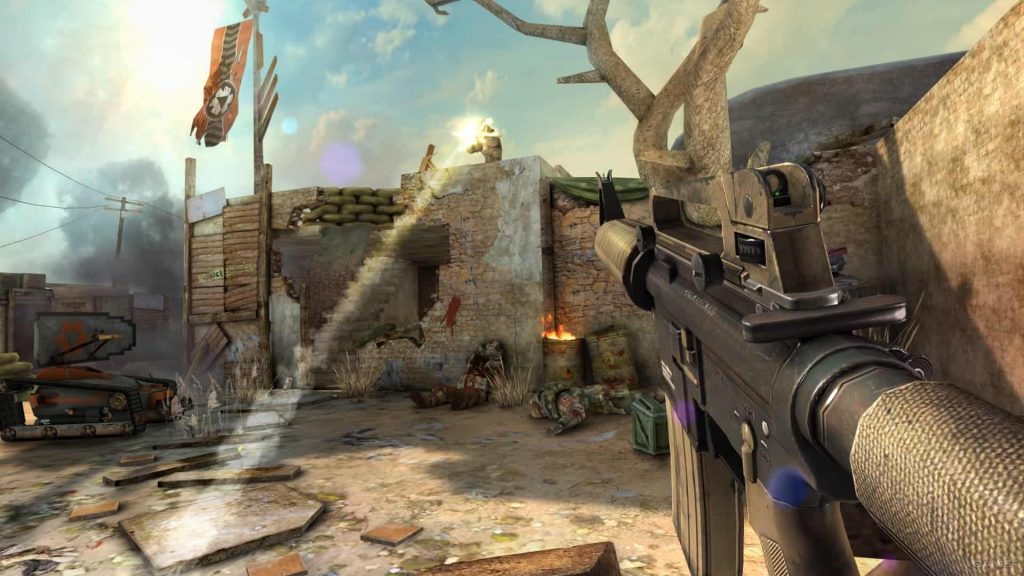
Overkill VR console project developed by Starloop Studios. Source: Starloop Portfolio
Why Studios Outsource PS4 and PS5 Game Development
Modern console game development requires expertise across engineering, optimization, multiplayer systems, QA testing, technical art, VFX, and live operations. Outsourcing allows publishers and studios to scale production efficiently while reducing development risks and accelerating delivery timelines.
External development teams can support full-cycle production or specialized services such as gameplay engineering, co-development, console optimization, game art, cinematic production, multiplayer integration, and certification support.
As part of the Magic Media group, Starloop Studios provides full-cycle PS4 and PS5 game development services including co-development, gameplay engineering, console optimization, QA testing, multiplayer systems, and live operations support. Our teams also contribute to large-scale productions through specialized PC and console game art services, high-end VFX and cinematics production, 3D animation services, and game QA testing solutions for modern AAA and live-service console projects.

Hello Guest console game case study developed with Starloop Studios. Source: Starloop Portfolio
FAQ About PS4 and PS5 Game Development
What engine is best for PS5 game development?
Unreal Engine 5 is currently one of the most widely used engines for PS5 game development because of its advanced rendering systems, Nanite geometry technology, and Lumen lighting features.
Is PS4 still relevant for game development in 2026?
Yes. The PS4 still maintains a large active player base, making cross-generation development commercially important for many studios and publishers.
How long does PS4 and PS5 game development take?
Development timelines vary depending on project scope, but modern console games can take anywhere from 12 months for smaller productions to more than 5 years for large AAA titles.
Why do studios outsource console game development?
Studios outsource console game development to access specialized expertise in engineering, game art, QA testing, VFX, multiplayer systems, optimization, and live-service operations while scaling production more efficiently.